
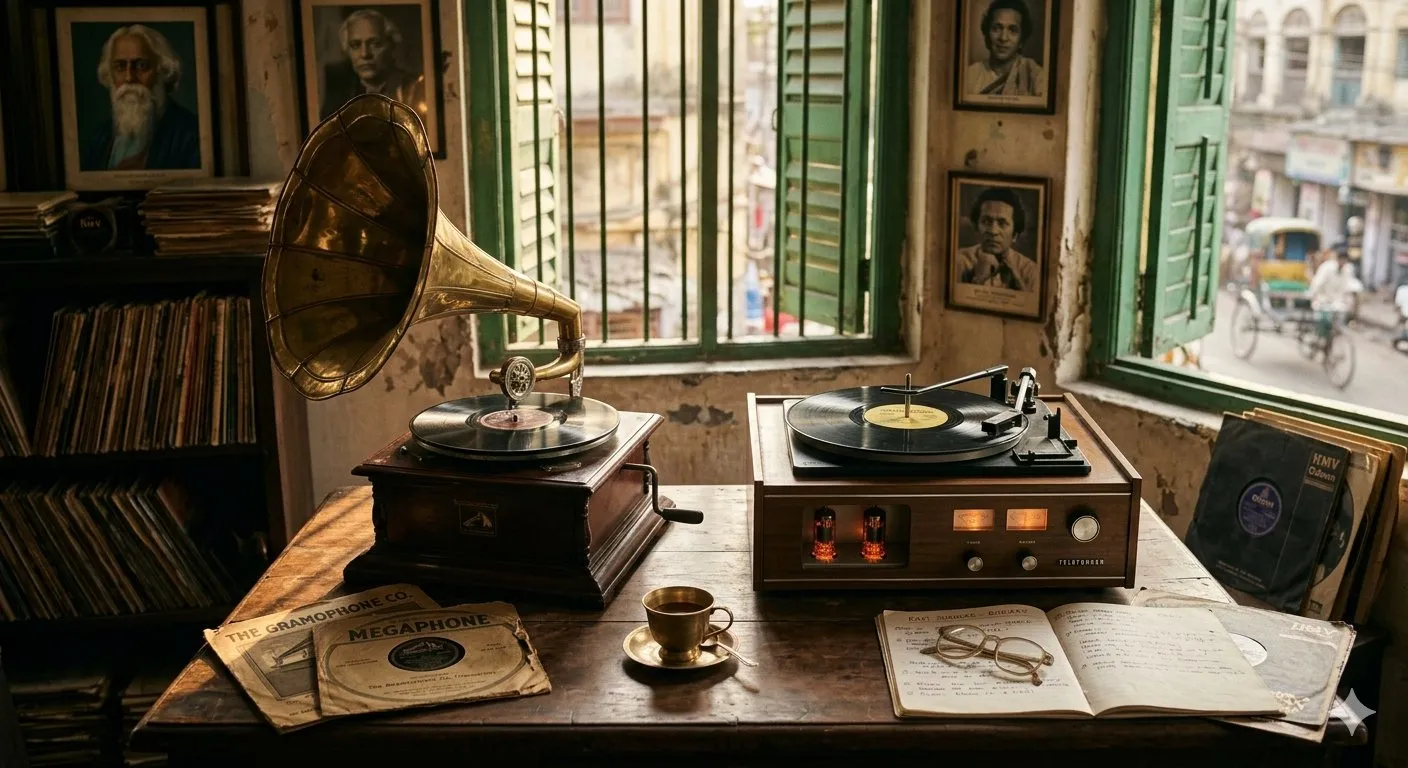

Before streaming playlists existed, a song in India travelled on a black disc turning at a steady speed. Kolkata stood at the centre of that story, with recording studios, film composers and a factory pressing discs for the subcontinent. Today, indian vinyl records carry that legacy into living rooms everywhere, preserving voices captured in moments never to be repeated. This article follows the path from early shellac to long-playing albums and explains why those grooves still matter to historians, musicians and curious beginners.
The City That Pressed the Discs
The Gramophone Company, better known through its His Master’s Voice label, opened a pressing plant at Dum Dum near Kolkata in the early twentieth century. For decades, classical vocalists, theatre singers and folk artists made their way to Bengal’s studios to be recorded. Those sessions built the first real archive of Indian music, and many surviving discs still hold performances that no other source preserves. Collectors who hold one today are touching the same pressing tradition that once supplied shops across the country.
When Film Songs Found a Home
As cinema grew, film songs became the sound of everyday life, and record labels followed the demand. Composers such as S. D. Burman, Madan Mohan and R. D. Burman turned soundtrack melodies into albums that families played on weekends. The long-playing format gave arrangers room to stretch, so orchestration, violins and rhythm sections could be heard properly. That is why an original film album often feels richer than a later compilation, with the music presented in the sequence its makers intended.
Shellac, Vinyl and the Word Gramophone
Many people still use the phrase gramophone records for anything that plays on a turntable, although the formats differ. Early shellac discs spun at roughly seventy-eight revolutions a minute and held a few minutes per side, while vinyl LPs run at thirty-three and a third and carry a full album. Shellac is brittle, fragile and heavy; vinyl is flexible and quieter. Knowing which format you hold helps you choose the right stylus, speed and storage method before the first careful play.
Bengal’s Own Soundtrack
Bengali music gives collectors a particularly rewarding path. Rabindranath Tagore’s songs were recorded by generations of singers, and seasonal collections organise them by mood, from monsoon longing to spring celebration. Hemanta Mukherjee’s warm baritone anchors countless albums, and Satyajit Ray’s musical fairy tale Hirok Rajar Deshe shows how a filmmaker could also shape a record. These titles carry language, poetry and humour that translate poorly into a streaming thumbnail, yet feel complete when you read the lyrics and hear them together.
Why Analogue Warmth Keeps Winning
Ask a regular vinyl listener what keeps them returning, and the answer is rarely about technical specifications. It is about ritual: choosing a sleeve, lowering the needle and committing to one side of music without skipping. Many listeners also describe the sound as fuller and more relaxed than compressed streams, though personal taste plays a role. Either way, the format rewards attention. A single album becomes an evening, and an evening becomes a memory that a playlist rarely manages to create.
Reading a Sleeve Like a Historian
Sleeves are small archives. The label design tells you the era, the catalogue number helps date the release, and the credits reveal the arrangers, lyricists and session players who rarely received public attention. Japanese pressings often add an obi strip and carefully printed notes, which collectors treasure. Even handwritten names or old shop stamps on the cover add provenance, showing that the record belonged to someone before you. Studying these details turns a casual purchase into research and deepens the pleasure of every listen.
Protecting Fragile Grooves
Old records deserve gentle handling. Hold discs by the edges, store them upright rather than stacked, and keep them away from heat and direct sunlight, which can warp vinyl. A soft carbon brush removes surface dust before each play, and a proper record cleaning fluid handles older grime without damaging the grooves. Replace worn inner sleeves with anti-static ones, and check your stylus regularly. A little discipline today means a Hemanta Mukherjee ballad or an orchestral film theme can keep playing for decades.
A Living Archive of Sound
Kolkata’s recording history proves that records are more than simple objects; they are memory made audible. Whether you are drawn to Tagore’s poetry, film orchestras or a Japanese jazz import, each disc rewards patience and curiosity. If you want to explore Bengali, Hindi, English and Japanese titles in one place, visit calcuttarecords.com and start with one record that truly matches your mood. Let the needle gently drop, read the sleeve, and let history unfold in the room where you listen.